
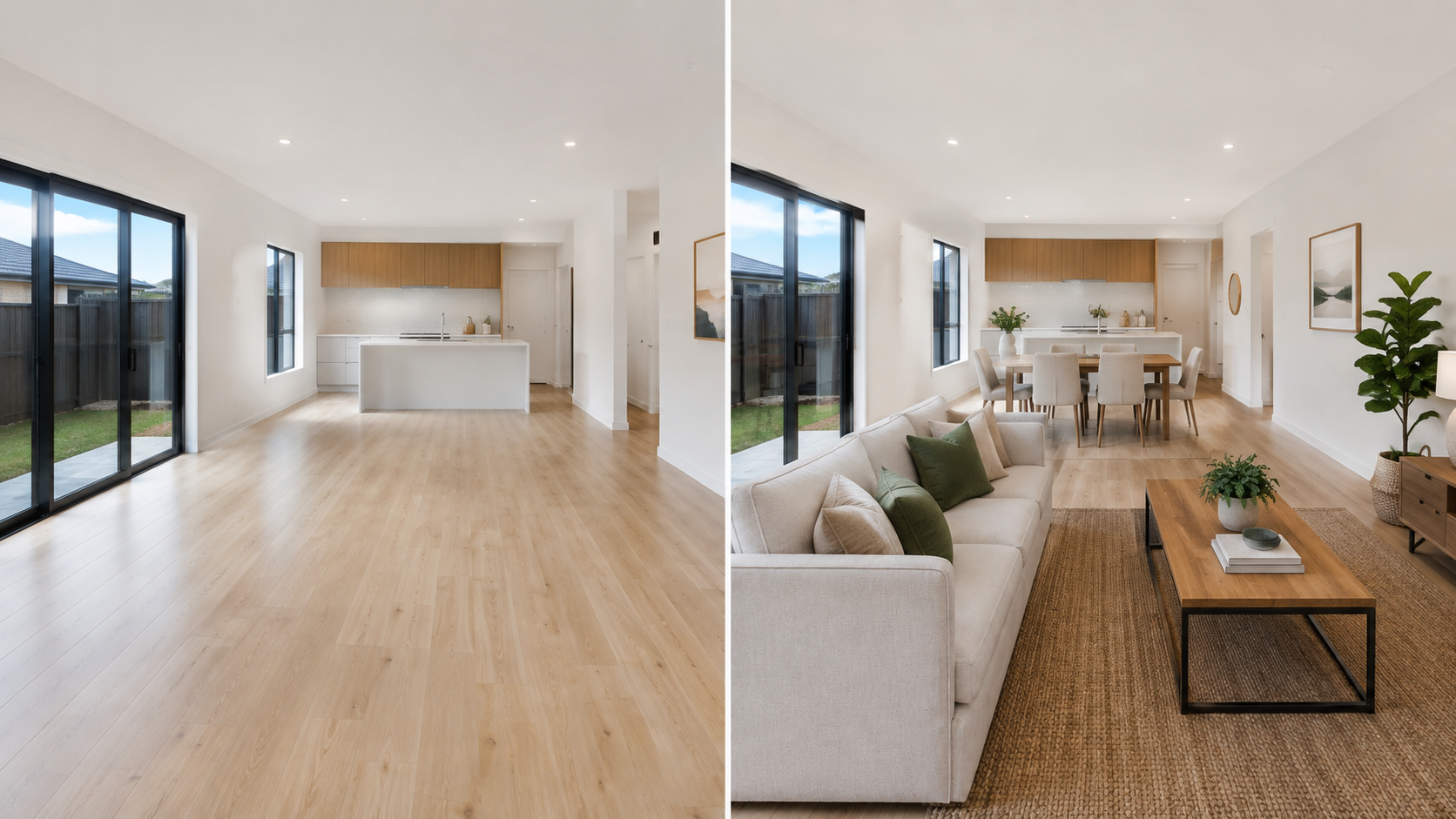
Furnished vs Unfurnished: Which Generates Higher Returns?
For property investors, deciding whether to furnish a rental property can have a significant impact on rental income, tenant demand and ongoing expenses.
However, a furnished property does not automatically produce a higher profit. The right choice depends on how the property will be rented, where it is located and which type of tenant or guest you want to attract.
In this guide, we compare three common rental strategies—long-term rentals, medium-term rentals and Airbnb—to help property owners decide when furnishing a property makes financial sense.
1. Unfurnished Long-Term Rentals
An unfurnished long-term rental is generally leased for 12 months or longer. The tenant provides their own furniture, appliances and household items.
This is often the simplest option for property owners who want stable rental income with relatively low operating involvement.
Advantages of an Unfurnished Long-Term Rental
- Lower setup costs
- Less furniture maintenance and replacement
- Longer average tenancies
- Fewer tenant changeovers
- More predictable rental income
- Lower day-to-day management requirements
Potential Disadvantages
- Lower weekly rent compared with furnished accommodation
- Less flexibility to change rental strategies
- The property may take longer to lease in areas with strong demand for furnished accommodation
When Does an Unfurnished Rental Work Best?
An unfurnished rental may be the most suitable option when:
- The property is in a family-oriented suburb
- The likely tenants already own furniture
- The property is a larger family home
- You want a stable, low-maintenance investment
- You do not want to invest additional money in furniture
- Local furnished or short-term rental demand is limited
For many suburban family homes, supplying expensive furniture may not create enough additional rent to justify the cost.
2. Furnished Medium-Term Rentals
Medium-term rentals generally accommodate tenants for several weeks to several months. Typical tenants may include relocating professionals, contractors, insurance clients, visiting academics, medical staff or families needing temporary accommodation.
These tenants usually want a property that is ready to occupy immediately.
Advantages of a Furnished Medium-Term Rental
- Higher rental rates than many unfurnished long-term rentals
- Fewer changeovers than short-term accommodation
- Demand from corporate and relocation tenants
- Greater flexibility for property owners
- Less intensive management than a high-turnover Airbnb
Potential Disadvantages
- Initial furniture and household setup costs
- More frequent vacancies than a traditional long-term tenancy
- Furniture requires maintenance and eventual replacement
- Income can be less predictable
- Demand varies considerably by location
When Does a Medium-Term Rental Work Best?
Medium-term accommodation can work particularly well when the property is:
- Close to hospitals, universities or major employment centres
- Near construction or infrastructure projects
- Located in a central business district
- Suitable for corporate travellers
- Available during gaps between the owner’s personal use
- In an area with demand for temporary relocation accommodation
A well-presented medium-term rental should usually include furniture, kitchen equipment, essential appliances, reliable Wi-Fi and practical storage.
The goal is not to fill the property with expensive décor. It is to make the home comfortable, functional and easy to move into.
3. Furnished Airbnb and Short-Term Rentals
Airbnb and other short-term rental platforms can offer the highest gross revenue potential, particularly in locations with strong tourism, business travel or event demand.
Guests expect a completely furnished and professionally presented property. This means an Airbnb requires a more comprehensive setup than most medium-term rentals.
Advantages of Airbnb
- Higher potential nightly income
- Ability to adjust pricing according to demand
- Increased earning potential during peak periods and major events
- Flexibility to block dates for personal use
- Access to both domestic and international guests
Potential Disadvantages
- Higher initial setup costs
- Platform and management fees
- Cleaning and linen expenses
- Utilities and internet are normally paid by the owner
- Furniture and household items experience more wear
- Revenue can fluctuate between peak and low seasons
- More active pricing, communication and property management are required
When Does Airbnb Work Best?
A furnished short-term rental may be worth considering when the property has several of the following characteristics:
- A desirable location
- Proximity to attractions, beaches, transport or business areas
- Strong demand from tourists or business travellers
- Convenient parking
- An attractive outlook or distinctive design
- A practical layout for couples, families or groups
- The potential to achieve a strong average nightly rate
Professional furnishing can also improve listing photography, attract more bookings and help the property compete against similar accommodation.
However, Airbnb performance should always be assessed using expected annual revenue—not only the highest nightly rate achieved during the busiest season.
Furnished vs Unfurnished: Which Produces the Best Net Return?
The correct comparison is not simply weekly rent versus nightly rate. Property owners need to calculate the likely net return after all operating expenses.
| Rental Strategy | Income Potential | Setup Cost | Ongoing Involvement | Income Stability |
|---|---|---|---|---|
| Unfurnished long-term rental | Moderate | Low | Low | High |
| Furnished medium-term rental | Moderate to high | Medium | Medium | Moderate |
| Furnished Airbnb | Potentially high | High | High | Variable |
An Airbnb may generate more gross revenue, but it also has higher expenses. These may include:
- Furniture and styling
- Linen and consumables
- Cleaning
- Electricity, water and internet
- Platform fees
- Property management
- Repairs and replacement items
- Periods without bookings
Similarly, a furnished medium-term rental may achieve a higher rental rate than an unfurnished property, but the additional rent must be sufficient to cover furniture depreciation, utilities and possible vacancy periods.
The best-performing strategy is the one that produces the strongest sustainable net return while matching the owner’s risk tolerance and investment goals.
How Much Should You Spend on Furniture?
Furniture should match the property’s target market and expected rental income.
A standard apartment does not necessarily need luxury furniture. However, the furniture should still be durable, comfortable and visually consistent.
Owners should generally prioritise:
- Good-quality mattresses
- Comfortable seating
- A practical dining area
- Reliable appliances
- Durable furniture that is easy to clean
- Appropriate curtains or blinds
- Adequate lighting
- Essential kitchen equipment
- A cohesive presentation for listing photography
For premium accommodation, the furnishing budget may need to be higher. Guests paying a premium nightly rate will expect stronger presentation, better-quality furniture and thoughtful amenities.
Under-furnishing a property can reduce its appeal, while over-furnishing may create unnecessary costs that the rental income cannot recover.
Can Furnishing Increase the Property’s Flexibility?
Yes. One of the main advantages of furnishing an investment property is that it may allow the owner to move between different rental strategies.
For example, a furnished apartment could potentially operate as:
- An Airbnb during peak travel periods
- Medium-term accommodation during quieter months
- A furnished long-term rental when market conditions change
This flexibility can be valuable, but only when there is sufficient demand for each rental type and the property complies with applicable building, body corporate, insurance and local requirements.
Which Option Is Right for Your Investment Property?
Consider an unfurnished long-term rental if you prioritise stable income, lower setup costs and minimal involvement.
Consider a furnished medium-term rental if your property is well located for professionals, relocation clients or temporary accommodation and you want a balance between income and management requirements.
Consider Airbnb if the property has strong short-term demand, a competitive location and the potential to generate enough revenue to cover its higher operating costs.
Before purchasing furniture or choosing a rental strategy, it is important to assess:
- Local rental demand
- Expected occupancy
- Realistic nightly or weekly rates
- Seasonal changes
- Setup and operating expenses
- Building or body corporate restrictions
- Insurance requirements
- Your preferred level of involvement
Get a Rental Income Assessment
Every property is different. A strategy that performs well for a central apartment may not be suitable for a suburban family home.
Kiwi Nest Property Management can assess your property’s location, layout and market potential to help you compare long-term, medium-term and short-term rental opportunities.
We can also assist with property setup, furnishing, professional photography, multi-platform marketing, guest management and ongoing revenue optimisation.
Contact Kiwi Nest today for a free property appraisal and discover which rental strategy could generate the best return for your investment.